English


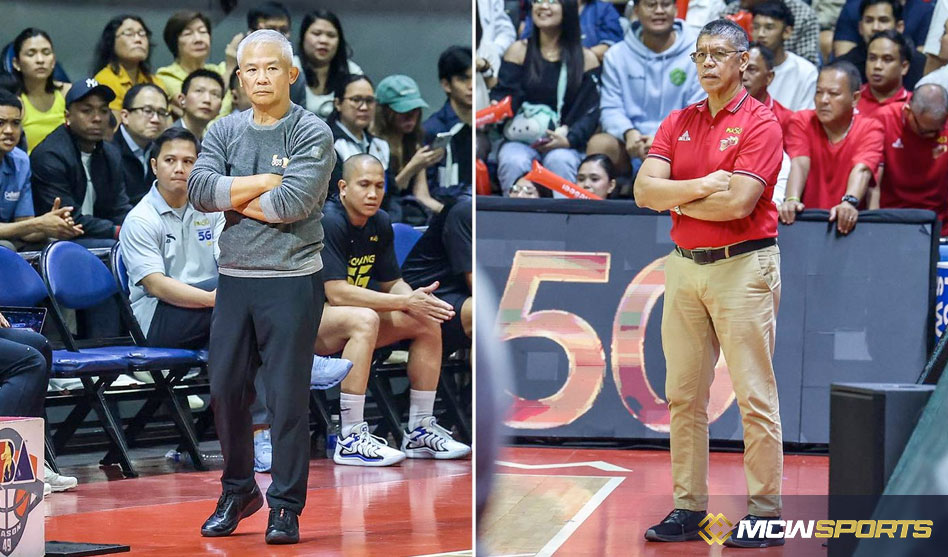
MANILA, Philippines – Magnolia head coach Chot Reyes has publicly admitted that solving the “Austria puzzle” has become one of his greatest problems of the season in a league where every possession counts and tactical subtleties may change results. As the PBA Philippine Cup enters more crucial stages, Magnolia’s priorities have changed from merely carrying out a strategy to conquering a particular stylistic and tactical challenge, which is represented by seasoned rival Austria. On the court, it becomes a complicated chess match where every little detail matters; off the court, it’s referred to as competition.
Over the years, Reyes, a seasoned coach with years of league experience and victories on his resume, has encountered numerous opponents and tactical challenges. However, the combination of speed, strength, defensive rotations, and opportunistic offense used by Austria’s side against Magnolia has created a distinct set of tactical challenges that call for meticulous planning and execution. For Chot, it’s not only about outscoring a competitor; it’s about upsetting momentum, upsetting rhythm, and claiming Magnolia’s identity in areas where Austria has historically excelled.
Reyes didn’t hold back when questioned about the recent encounter. He recognized that their interactions were competitive, that both ends of the floor needed to make adjustments, and that paying attention to detail was crucial. He stated, “We have to counteract certain tendencies they have.” “We’ve run our schemes and made adjustments, but we need to be sharper, more consistent, and more disciplined in order to solve this puzzle.”
This type of analysis reveals Magnolia’s perspective on the matchup. They are neither undervaluing their opponent nor accepting that past performance is a reliable indicator of future results. Rather, Magnolia’s analytical strategy is based on self-improvement and a readiness to examine all aspects of their game, including offense, defense, transition, scoring efficiency, and even how they respond to communication breakdowns at crucial situations.
Austria has many advantages. They have a strong transition assault that takes advantage of turnovers, a dynamic offense that can create mismatches, and a defense that rotates with time and purpose. Opposing coaches are under pressure to make quick adjustments and make sure that matchups are optimum because of their capacity to stretch the floor or penalize errors in half-court settings. In order to overcome this, a coach such as Reyes must comprehend not only individual habits but also collective patterns, such as how Austria’s bigs set screens, how their guards attack gaps, how they rotate back on defense following turnovers, and how they react as the scoreboard closes.
As a result, the tactical conflict is reduced to a series of little modifications. In order to maintain continuity without overstretching important players, coaches argue over space, rotations, switch time, and the best way to distribute minutes. Magnolia’s problem is not just defensive; they also have to deal with Austria’s disruption in their offensive sequence. Both coaching staff and ardent supporters have been fascinated by the questions of when and how to increase tempo, when to slow down the game, and how to take advantage of mismatches without compromising balance.
The stakes are well known to the players on Magnolia’s roster. The significance of execution, particularly under pressure, has been discussed by senior contributors. They stress the importance of playing within the system’s parameters while yet being aggressive when the chance presents itself. Younger players are becoming more adept at anticipating rather than reacting to defensive cues, which is a sign of mature playoff basketball.
Austria’s reputation isn’t based on good fortune or standout performances. They have gained respect by continuously competing at a high level, challenging teams in every stage of the game, and frequently pressuring rivals into awkward possessions when there is very little room for error. They put a lot of effort into their own preparation, and they are confident because they think that any opponent can be defeated with the correct combination of strategy and effort.
PBA fans should not miss the forthcoming matches between Magnolia and Austria because of these competitive dynamics. They transform straightforward win-loss implications into more complex stories about player performance, coaching skill, and strategic development. This game is full of the kind of drama that characterizes championship runs, whether it’s a late-quarter adjustment, a crucial substitution that changes defensive alignment, or a timely basket that turns the momentum.
There isn’t a straightforward answer for Chot Reyes and Magnolia; there isn’t a single move or isolated change that will cure the problem on its own. Rather, it is a combination of discipline, communication, preparation, and clutch execution. Magnolia will need to reduce expensive errors, take advantage of late-game possibilities, and remain composed when Austria applies pressure.