English


German heavyweights FC Bayern Munich travel to Stavanger to face Eliteserien contenders Viking FK in a compelling UEFA Champions League league phase encounter at the SR-Bank Arena. As continental competition resumes, both clubs approach this fixture with distinct tactical imperatives and contrasting squad realities. Vincent Kompany’s Bayern team aims to assert its European pedigree on the road following a dramatic weekend draw in the Bundesliga, while Viking FK seeks to leverage home turf advantage and synthetic pitch conditions to produce a memorable upset against the six-time European champions.
FC Bayern Munich entered the contest managing minor squad adjustments, particularly following the domestic draw against Augsburg. Attacking midfielder Jamal Musiala remains sidelined due to a thigh injury, which opens the door for Ismael Saibari to assume central creative responsibilities behind Harry Kane. Right-back Konrad Laimer returns to availability after missing the weekend fixture for the birth of his first child, likely stepping into the starting lineup ahead of Josip Stanišić, while second half goalscorer Nathaniel Brown offers another dynamic option on the flank. Meanwhile, Viking FK, managed by joint head coaches Bjarte Lunde Aarsheim and Morten Jensen, enter with near full health, relying on key figures such as Joe Bell in central midfield and talismanic forward Zlatko Tripić to spearhead their counter attacking efforts.
Tactically, the match features a classic contrast in styles between Bayern’s possession driven, high pressing setup and Viking’s compact, transition focused defensive structure. Kompany’s system emphasizes spatial control, aggressive counter pressing, and fluid positional rotations, with Joshua Kimmich orchestrating build up play from deep alongside Aleksandar Pavlović. To remain competitive, Viking FK must maintain rigid low-block discipline, neutralize central passing lanes into Saibari, and exploit immediate turnover opportunities by launching direct passes toward forwards Peter Christiansen and Erik Botheim into the space behind Bayern’s high defensive line.
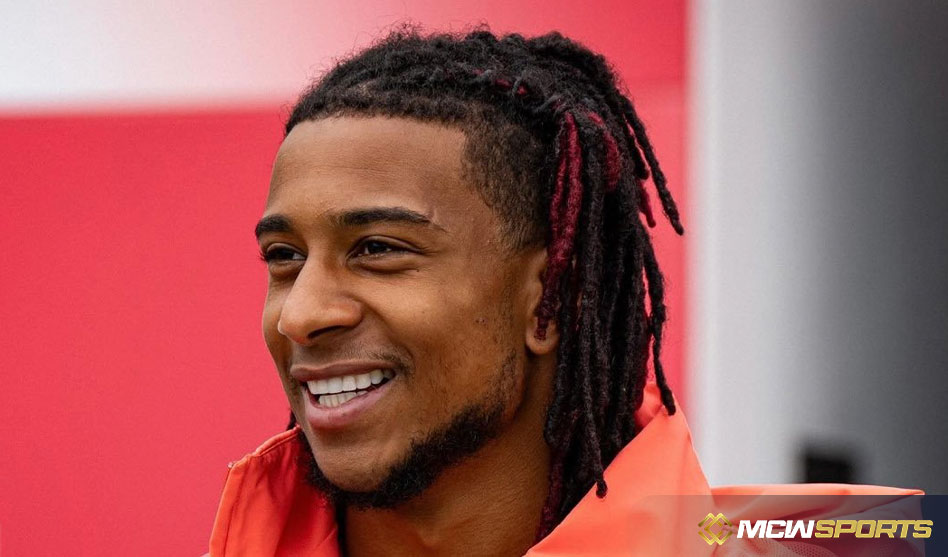
Host side Viking FK are expected to align in a defensive 4-4-2 formation featuring Arild Østbø in goal, supported by a back line of Henrik Heggheim, Gianni Stensness, Henrik Sælebakke Falchener, and Kristoffer Haugen. The midfield unit features Kristoffer Askildsen and Joe Bell operating centrally, flanked by wide midfielders to protect spatial gaps, while Peter Christiansen and Erik Botheim lead the attack. Conversely, FC Bayern Munich are projected to deploy their familiar 4-2-3-1 arrangement anchored by Manuel Neuer in goal, behind a back four of Konrad Laimer, Dayot Upamecano, Jonathan Tah, and Alphonso Davies. Joshua Kimmich and Aleksandar Pavlović will anchor the midfield pivot, supporting an offensive trio of Michael Olise, Ismael Saibari, and Luis Díaz positioned behind central striker Harry Kane.
While FC Bayern Munich remain heavy favorites owing to superior technical depth and international pedigree, navigating cold Norwegian weather and artificial turf conditions presents a genuine operational test. A victory for Bayern would firmly consolidate their position near the top of the Champions League table, whereas any positive result for Viking FK would stand as a landmark achievement in modern Norwegian football history.
Synthetic Turf Dynamics and European Ambitions
Navigating the unique playing conditions at the SR-Bank Arena introduces a distinct tactical variable that Bayern Munich must manage effectively throughout the ninety minutes. Unlike the natural grass pitches familiar across Bundesliga venues, Viking FK’s artificial synthetic surface fundamentally alters ball speed, bounce height, and player traction. For a possession-dominant side like Bayern that relies heavily on sharp, one-touch passing sequences and rapid directional changes in tight spaces, adapting to the artificial surface requires immediate technical recalibration. Home side Viking FK entered this clash fully acclimatized to these conditions, utilizing the faster ball roll to execute swift counter-attacking transitions through wide channels.
For the team captained by Vincent Kompany, it will be essential to establish early control over the match tempo in order to mitigate any surface advantage that the hosts may have previously enjoyed. The technical leaders of Bayern, which include Joshua Kimmich and Harry Kane, will be responsible for dictating the rhythm from the moment the whistle blows. They will need to ensure that precise pass weight and spatial awareness are maintained in order to avoid costly turnovers. Not only would Bayern be able to secure three crucial points in the standings of the UEFA Champions League if they were to successfully conquer these environmental factors, but they would also demonstrate their tactical adaptability when confronted with non-traditional European challenges for the first time.