English


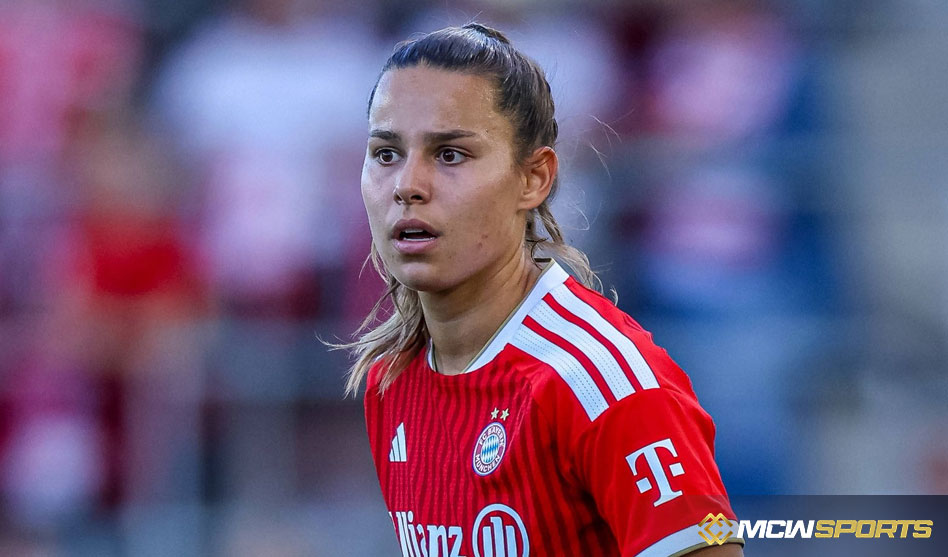
FC Bayern Munich Women have suffered a significant blow to their central midfield infrastructure following confirmation that star playmaker Lena Oberdorf will be sidelined for the foreseeable future. The German international is set to miss competitive action over the coming weeks after experiencing an adverse reaction and structural irritation in her right knee. Official medical diagnostics confirmed that Oberdorf must temporarily step back from full first team training protocols to undergo targeted load management, specialized physical therapy, and restorative rehabilitation supervised by the club’s medical staff.
The timing of the announcement presents a challenging setback for both the player and the club. Oberdorf had recently completed a long, grueling journey back to match fitness following severe knee ligament damage sustained during international duty, making her recent return to competitive fixtures an emotional milestone. However, the physical demands of top tier competition have triggered localized joint inflammation, prompting Bayern’s technical leadership and head coach Alexander Straus to adopt an exceptionally conservative stance. Rather than risking long term structural joint damage or secondary compensatory injuries, the medical department has prioritized absolute recovery over immediate tactical availability.
From a tactical perspective, losing Oberdorf deprives Bayern Munich of one of the most complete defensive central midfielders in modern women’s football. Known for her aggressive tackling, elite aerial dominance, and remarkable tactical awareness, Oberdorf serves as the primary engine room anchor for the Bavarian side. Her ability to break up opposition counter attacks, win contested second balls in central zones, and immediately initiate transition sequences provides Bayern with a distinct physical edge. Without her imposing presence, the team loses a vital protective shield in front of the backline, forcing the coaching staff to alter their defensive pressing triggers and buildup mechanics.
To mitigate her absence during a dense stretch of domestic and European fixtures, the Bavarian club will rely heavily on squad depth and positional versatility across the central pitch. Experienced Austrian international Sarah Zadrazil will be expected to absorb a heavier defensive burden, stepping into the primary ball winning role to maintain central control. Additionally, players like Georgia Stanway will need to adjust their positioning, balancing their natural forward driving instincts with disciplined defensive positioning to insulate the center backs. While Bayern possesses a deep roster capable of managing short term absences, replacing the unique physical profile and big match composure that Oberdorf provides remains a complex structural puzzle.
Beyond the immediate tactical adjustments, Oberdorf’s temporary injury pause highlights the broader, systemic challenge of workload management in modern elite women’s sport. The relentless calendar, which seamlessly blends high intensity domestic league matches, continental cup competitions, and international tournament windows, leaves minimal margin for proper physical recovery. For players returning from major joint rebuilds, the transition back to peak physical output requires delicate load monitoring. Bayern’s decision to pull Oberdorf out of rotation immediately upon detecting joint irritation reflects a modernized, athlete-first medical strategy designed to ensure career longevity rather than chasing short term results.
The psychological dimension of this setback also requires careful navigation. Returning from a prolonged injury layout demands immense mental resilience, and experiencing physical complications shortly after achieving match fitness can be daunting for any professional athlete. However, the clear communication from the Bayern hierarchy emphasizes that this period is a precautionary pause rather than a complete structural relapse. By stepping back now, Oberdorf can address the underlying joint inflammation completely, ensuring that when she eventually returns to the pitch, she can play with total physical confidence and zero physical hesitation.
Looking ahead at the upcoming fixture list, Bayern Munich faces a crucial stretch in the Frauen-Bundesliga title race alongside demanding UEFA Women’s Champions League group stage encounters. Navigating these high stakes encounters without their marquee midfield signing will test the squad’s collective resilience and tactical adaptability. The coaching staff will likely experiment with fluid double pivot combinations to distribute the defensive workload across multiple players, ensuring the midfield line does not become overrun by athletic opposition units.
Ultimately, while Oberdorf’s absence is a painful operational blow for Bayern Munich, the long term perspective remains unchanged. The young German midfielder represents a foundational pillar for both club and country over the next decade. By choosing patience and comprehensive medical care over rushed tactical expediency, Bayern Munich is protecting a vital asset. As the medical team monitors her recovery week by week, the rest of the squad must step up to maintain their championship standard, awaiting the moment their central midfield anchor is fully cleared to reclaim her dominant role on the pitch.