English


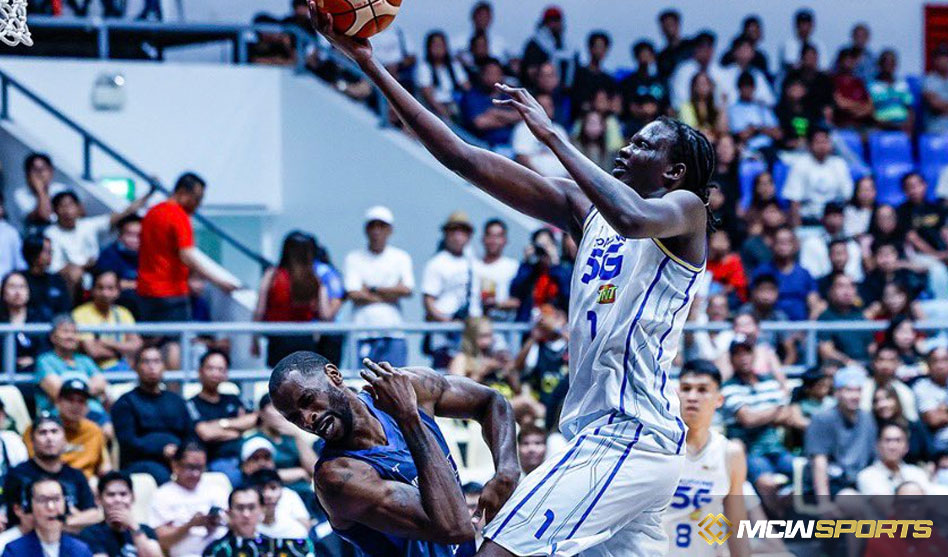
The second quarter of the PBA calendar has transformed into a brutal war of attrition, leaving some of the league’s most influential franchises structurally compromised. While postseason basketball always demands an immense physical sacrifice, the concentrated schedule and high-intensity style of play have resulted in an unprecedented wave of severe injuries over the last three months. From catastrophic Achilles tears to debilitating joint damage, the medical tent has unfortunately become just as important as the tactical drawing board.
Here is an analytical breakdown of the five major injuries within this quarter that have fundamentally altered the competitive landscape of the league.
1. Bol Bol (TNT Tropang 5G)
The most high-profile casualty of the postseason came in the semifinals, when TNT’s generational import collapsed to the hardwood in agonizing pain. Medical evaluations later confirmed the absolute worst-case scenario: a complete rupture of his left Achilles tendon. Standing at 7-foot-3, the unique center had completely transformed the defending champions’ identity, serving as an elite rim protector while spacing the floor with perimeter ball handling. His sudden, season-ending departure instantly dismantled the primary structural pillar of the Tropang 5G, forcing the coaching staff into an emergency tactical overhaul and stripping the franchise of its defensive safety net.
2. Christian Standhardinger (Terrafirma Dyip)
The frontline dynamics of the league suffered another massive shift when veteran big man Christian Standhardinger sustained a severe knee injury during a high-stakes classification matchup. The rugged center, known for his relentless interior presence and elite mid-range face-up game, suffered a major meniscus tear that required immediate surgical intervention. Without his low-post scoring and interior gravity, his team lost its primary emotional and tactical anchor. The injury effectively derailed their aspirations for a deep postseason run, exposing a critical lack of domestic frontcourt depth.
3. Jamie Malonzo (Barangay Ginebra Gin Kings)
Barangay Ginebra’s wing rotation was dealt a severe blow when dynamic forward Jamie Malonzo suffered a significant calf tear during a late-stage regular season encounter. Malonzo provides the Gin Kings with vital defensive versatility, elite weak-side rim protection, and transition scoring. His inability to suit up for the postseason placed an immense physical tax on the veteran core, forcing aging residents to play extended minutes against high-octane transition offenses. His absence remains a glaring vulnerability that opponents have consistently sought to exploit in half-court rotations.
4. Maverick Ahanmisi (Barangay Ginebra Gin Kings)
Compounding the misery for the Gin Kings, steady backcourt presence Maverick Ahanmisi was sidelined later in the quarter due to a severe ankle sprain that resulted in underlying ligament damage. Ahanmisi serves as the primary bridge between the starting unit and the bench, providing secondary playmaking and crucial perimeter shooting. Losing his veteran poise and backcourt stability completely disrupted the backcourt rotations, forcing the coaching staff to rely heavily on inexperienced guards during high-pressure postseason sequences.
5. Tyler Tio (Phoenix Super LPG Fuel Masters)
The Phoenix Super LPG Fuel Masters saw their offensive engine completely stall this quarter when rising star guard Tyler Tio suffered a fractured hand during a highly physical baseline drive. As the primary floor general, Tio was having a breakout campaign, showcasing elite pick-and-roll navigation and cold-blooded perimeter shooting. His sudden displacement from the active roster stripped the young franchise of its primary late-game closer and structural coordinator, causing the team’s offensive efficiency ratings to plummet over the final weeks of their campaign.
The Institutional Fallout
The collective impact of these individual medical crises has completely rewritten the hierarchy of the league. Franchises that once boasted deep, balanced rosters are now operating on razor-thin margins for error. The sudden influx of major injuries has also sparked intense discussions among league executives regarding player conditioning, court traction, and the physical toll of the modern, transition-heavy style of play.
As the remaining healthy squads advance deeper into the championship brackets, the ultimate victor of this tournament may not necessarily be the most talented roster, but rather the most resilient organization capable of surviving this devastating physical tax.
These catastrophic medical setbacks continue to transform the championship race, turning the postseason into a brutal test of organizational depth and pure survival.