English


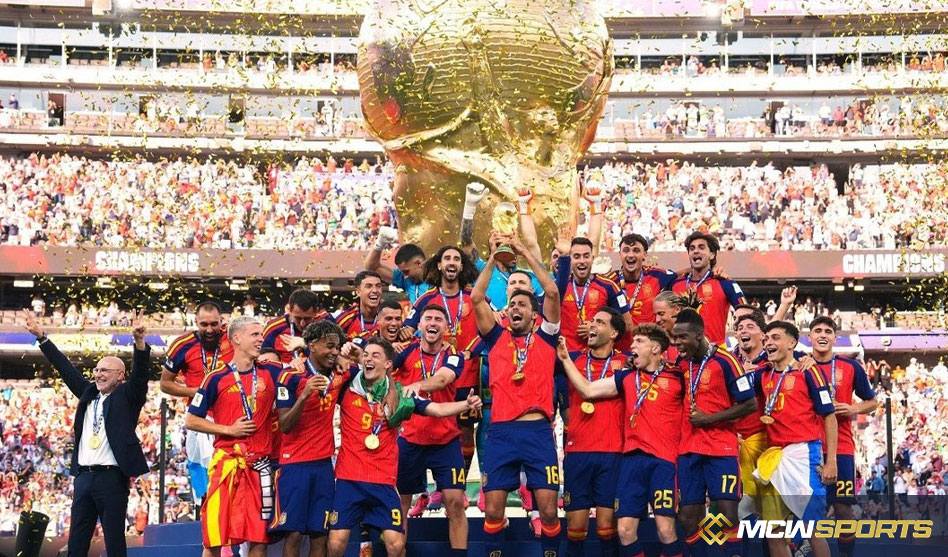
The curtain has officially fallen on the landmark FIFA World Cup 2026 across North America, culminating in a dramatic final at New York New Jersey Stadium. In an intense, high-stakes tactical battle against defending champions Argentina, Spain secured a 1–0 extra time victory to claim their second global crown sixteen years after their iconic 2010 triumph.
The landmark forty eight nation tournament concluded in spectacular fashion as substitute forward Ferran Torres struck in the 106th minute of extra time, converting a precise pass from Nico Williams to break the goalless deadlock. Spain’s young squad, guided by Luis de la Fuente, neutralized Argentina’s attack throughout regulation time while controlling possession. Argentina’s defense held firm through ninety frantic minutes, but a late red card to midfielder Enzo Fernandez left the South American champions vulnerable in the extra session before Torres delivered the championship winning strike.
In the third place playoff held at Miami Stadium on July 18, England defeated France 6–4 in an extraordinarily open, high scoring encounter to claim the bronze medal. Meanwhile, French superstar Kylian Mbappé finished as the tournament’s overall top scorer with ten goals across eight matches, capturing his second consecutive World Cup Golden Boot.
FIFA World Cup 2026™ Knockout Stage Final Results
| Round | Matchup | Venue | Result |
|---|---|---|---|
| Final | Spain vs Argentina | New York New Jersey Stadium | 1–0 (AET) |
| 3rd Place Playoff | France vs England | Miami Stadium | 4–6 |
| Semifinal 1 | France vs Spain | Dallas Stadium | 0–2 |
| Semifinal 2 | England vs Argentina | Atlanta Stadium | 1–2 |
| Quarterfinal 1 | France vs Morocco | Gillette Stadium | 2–0 |
| Quarterfinal 2 | Spain vs Belgium | SoFi Stadium | 2–1 |
| Quarterfinal 3 | Norway vs England | Miami Stadium | 1–2 (AET) |
| Quarterfinal 4 | Argentina vs Switzerland | GEHA Field at Arrowhead Stadium | 3–1 (AET) |
Spanish Dominance and Individual Accolades Define Historic Expansion Era
The post tournament analysis of the FIFA World Cup 2026 highlights a monumental shift in international football operations. Beyond the central team trophy, individual honors recognized players who dictated the tempo across an grueling 104 match schedule. Midfield anchor Rodri earned the Golden Ball as the outstanding player of the tournament. His exceptional positional intelligence, defensive sweeps, and distribution allowed Spain to maintain complete control throughout their unbeaten campaign.
The Golden Boot went to France captain Kylian Mbappé, who delivered a incredible ten goal haul across eight appearances. Mbappé became the first player in modern history to win consecutive Golden Boot titles, extending his all time career World Cup goal total to 22. Meanwhile, Spanish goalkeeper Unai Simón captured the Golden Glove by recording seven clean sheets and allowing just a single goal through the entire tournament. Nineteen year old central defender Pau Cubarsí took home the Best Young Player Award after playing every single minute of Spain’s title run.
| Award Category | Recipient | Nation | Key Statistic |
|---|---|---|---|
| Golden Ball | Rodri | Spain 🇪🇸 | Tournament MVP, Unbeaten Run |
| Golden Boot | Kylian Mbappé | France 🇫🇷 | 10 Goals, 4 Assists |
| Golden Glove | Unai Simón | Spain 🇪🇸 | 7 Clean Sheets, 1 Goal Conceded |
| Best Young Player | Pau Cubarsí | Spain 🇪🇸 | 100% Minutes Played at 19 Years |
| Fair Play Award | National Team | Netherlands 🇳🇱 | Fewest Disciplinary Cards |
Operational Impact of the Expanded Format
The transition to a 48 team format created structural challenges and tactical shifts across host cities. Teams had to adjust travel schedules, physical recovery protocols, and tactical rotations to survive the new round of 32 knockout stage. Smaller football federations demonstrated significant growth, with nations like Cabo Verde and Morocco pushing traditional powerhouses to extra time in high intensity fixtures.
As federations review their performance data, attention now turns to long term squad management. Modern coaching units are placing greater emphasis on tactical fluidity, rapid defensive recovery, and youthful center back pairings like Cubarsí and Robin Le Normand. This tournament established a structural blueprint that will influence international football development pathways leading into the next global tournament cycle.