English


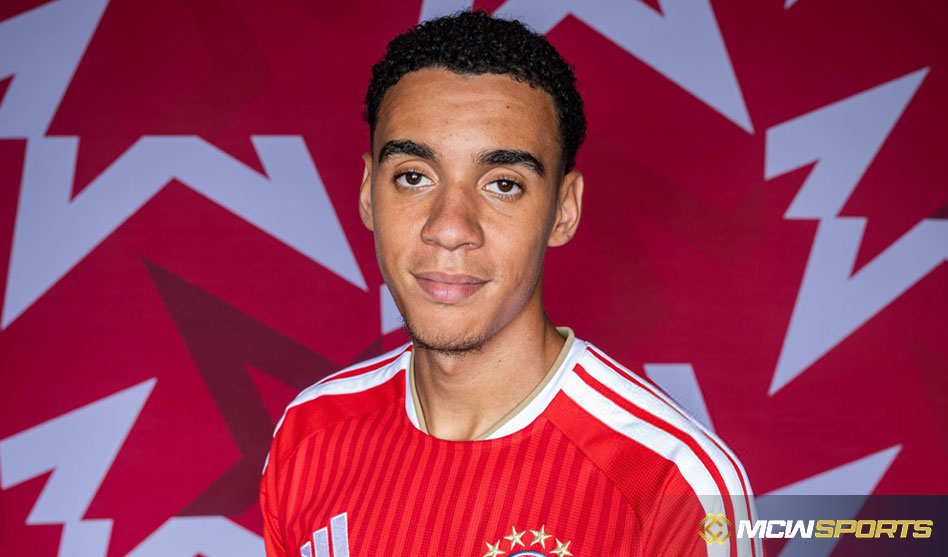
Bayern Munich’s training complex at Säbener Straße has taken on a new atmosphere during the November international break. With many first-team players away on national duty, the club’s routine has shifted toward recovery work and conditioning. Among those staying in Munich are Jamal Musiala and Luis Díaz, who are using the pause in the calendar to make progress in rehabilitation. Both attackers are working with Bayern’s medical and fitness staff as they aim to regain full fitness before the demanding winter period.
Musiala continues his recovery from a muscle fiber tear in his right thigh. During an individual session, the Germany international completed ball exercises that tested his movement, coordination, and control. He worked through changes of direction and short passing drills, showing encouraging signs as he gradually increased his workload. His progress offers a positive step, but Bayern’s staff are expected to remain careful. The priority is to let the injured muscle heal properly and avoid a setback caused by returning too quickly.
Díaz on the other hand is also following a training program while his teammates represent their countries. The Colombian winger has been working on ball control, aerobic fitness, acceleration, and changes of direction. These exercises are intended to rebuild his conditioning and prepare him for the physical demands of head coach Vincent Kompany’s approach. Individual sessions also require patience and discipline, as players work through repeated drills without the pace and atmosphere of team training.
The international break gives both players time to concentrate on recovery without the demands of a match schedule. Their progress will be important for Bayern as the season moves toward a busy stretch of fixtures. However, the club’s medical team will determine when each player is ready to return to training and competitive action. For now, Musiala and Díaz remain focused on improvement, with the aim of rejoining the squad only when physically fully prepared.
The strategic value of these extra shifts cannot be overstated. With Bayern competing simultaneously at the summit of the Bundesliga and navigating the league phase of the UEFA Champions League, squad depth remains the ultimate currency. Integrating fully fit game changers like Musiala and Díaz back into the starting eleven will provide an immense tactical boost. Their ability to break defensive blocks and dictate tempo in the final third transforms Bayern’s offensive ceiling as the fixture congestion reaches its seasonal peak.
As the international window draws to a close, the final hurdle in their rehabilitation involves seamless reintegration into full team training once traveling squad members return to Munich. While medical staff have avoided pinning an exact matchday deadline on their immediate return, the aggressive trajectory of their recovery suggests a welcome reunion on the pitch is fast approaching. Until then, Musiala and Díaz continue their solitary grind, proving that elite football excellence requires just as much dedication in the treatment room as it does under the blinding stadium lights.
Bayern Munich’s philosophy regarding individual rehabilitation and developmental training sets a distinct benchmark across European football. While many clubs rely strictly on standard medical recovery protocols, Bayern integrates sports science, data analytics, and personalized coaching into a comprehensive framework that accelerates player readiness without triggering setbacks. This meticulous attention to detail ensures that recovering stars like Jamal Musiala and Luis Díaz rebuild not only baseline functional capacity, but also the sharp cognitive processing required for elite match tempos.
Comparing this methodology to rival European clubs highlights a crucial structural divergence. Many organizations rush players back under competitive pressure during congested fixture lists, often increasing recurrence rates for muscular injuries. Conversely, Bayern maintains a strict developmental buffer, utilizing individualized training blocks during international breaks to refine technical mechanics and physical asymmetries. By prioritizing long-term physiological resilience over short-term squad availability, the German giants cultivate an environment where players return stronger, smarter, and fully equipped to sustain peak performance through the grueling winter months.
Bayern Munich fans can anticipate an electrifying winter campaign filled with critical domestic battles and thrilling European nights. As recovering stars return to bolster the squad and tactical mastery takes hold, supporters can expect relentless attacking football, fierce championship contention, and unforgettable moments of continental glory.